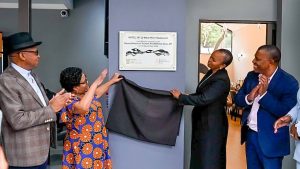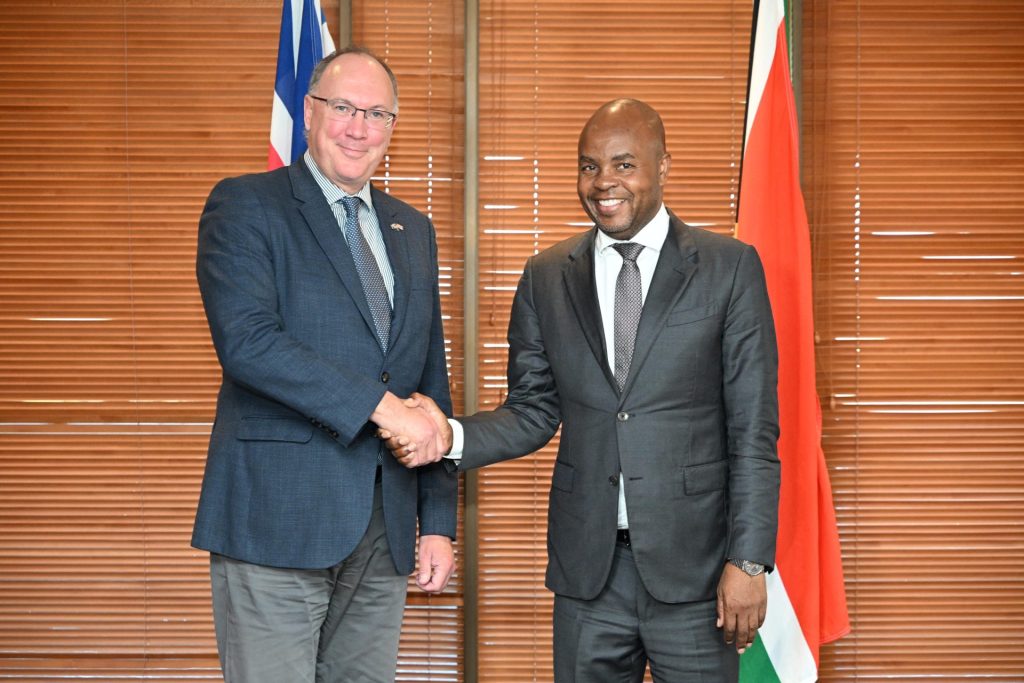
Pic:(left) British High Commissioner, His Excellency Antony Phillipson and Mpumalanga Premier Mandla Ndlovu
For a citrus farmer in Nkomazi watching export prices, a student in eMalahleni eyeing a scholarship, or a former coal worker retraining for solar installation, the meeting between Premier of Mpumalanga, Mandla Ndlovu, British High Commissioner, His Excellency Antony Phillipson, and his delegation at the Mpumalanga Provincial Government offices was about more than handshakes.
The engagement reportedly focused on deepening trade and investment ties between the province and the United Kingdom.
The Premier pushed further. He appealed for the continuation and expansion of existing United Kingdom investments in the province, emphasising that the partnership between Mpumalanga and the United Kingdom should be elevated to a new level.
The discussions reportedly centred on unlocking investment opportunities across key economic sectors, with particular emphasis on the just energy transition and the broader green economy.
For communities built around coal, “transition” often sounds like risk. Premier Ndlovu made it about reward.
He reiterated his commitment to ensuring that opportunities arising from the transition to a low-carbon economy translate into tangible benefits for communities and small businesses across the province.
“Mpumalanga is committed to creating an enabling environment for sustainable investment that supports inclusive economic growth and job creation,” the Mpumalanga Provincial Government stated.
That means a welder in Secunda learning to build solar frames. It means a co-op in Bushbuckridge getting finance to export oranges. It means a young woman from Standerton boarding a plane on a UK scholarship.
The British High Commissioner reportedly outlined areas of mutual interest for expanded cooperation, including enhancing export opportunities to the United Kingdom for Mpumalanga-produced goods such as citrus, advancing university exchange programmes through scholarship opportunities for South African students, and continuing collaboration on the green transition.
These areas are said to build on existing partnerships between the two countries covering growth, climate action, health, science and innovation, and the digital economy.
The engagement reportedly underscored the importance of continued collaboration between the Mpumalanga Provincial Government and international partners in advancing the province’s developmental priorities.
Behind the policy terms — “green economy,” “skills development,” “export opportunities” — are households.
The Provincial Government said for Mpumalanga, the UK visit wasn’t just diplomacy. It was a bid to make global partnerships feel local: in paycheques, in school fees, and in the quiet dignity of work that lasts.