Triland To Unlock Regional Tourism Potential
By Lwazi Raul-Shongwe
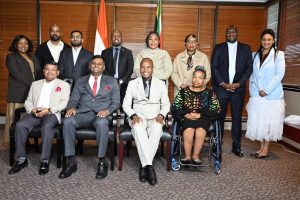
The Triland Workshop 2025, held in Matola-Mozambique, brought together stakeholders within the tourism sector from South Africa, Mozambique and the Kingdom of Eswatini to discuss the future of regional tourism. The workshop aimed to strengthen ties between the three countries and explore ways to boost tourism, economic integration, and cultural exchange.
The Triland initiative reportedly seeks to create a tourism corridor that integrates the natural, cultural, and historical destinations of the three countries. The region aims to offer a unique and diverse experience by ensuring that the three partners(South Africa, Mozambique and the Kingdom of Eswatini) leverage each other’s strengths.
MTPA(Mpumalanga Tourism and Parks Agency) Executive Manager, Ntwanano Mtungwa, said the province has recognised the importance of regional cooperation, particularly with Mozambique and Eswatini, which are its top two source markets for foreign tourists.
He said the workshop was aimed at providing the platform for the private sector to share their insights and recommendations on how to improve the Triland initiative.

According to Mtungwa, the relations between the three countries did not start with the signing of the Triland Agreement in 2024, but are historic. He said the tourism industry has always been seen as a low-hanging fruit in terms of achieving the intended vision of integrating the economy of the three countries.
“ This workshop is more about you, the private sector, expressing yourselves about what assistance government should provide in order to grow this Triland. We also want to advocate, through yourselves, to our respective governments in terms of some of the value-added service that they should improve on in order to grow the sector.
“ We started the Triland with tourism because it has very limited barriers to enter, but our ultimate objective is not only to cooperate in tourism, but to achieve regional economic integration and prosperity in the SADC(Southern African Developing Community).” said Mtungwa.
He said the three countries are unique in their product offering, of which South Africa is mostly based on scenic beauty and wild life, while Mozambique and Eswatini have a long coastline and very unique system of governance, respectively.
“ The reason we do this is to achieve economic spin-offs, create jobs for our people, but also to sell the cultures of our nations. We are fortunate, as Mpumalanga, that we have the best of all cultures. We’ve got Swati culture which is well-entrenched within our province, we’ve got Shangaan people, mostly from Gaza province in Mozambique. We have them settled in our province
“ We see their presence as an opportunity to exchange our cultural values, our music and our way of life. We want to ensure that products that come from Mozambique and Eswatini find a market in South Africa,” said Mtungwa.
According to Mtungwa, the service at South African Border Control was cited by one Tour Operator as one of the barriers that need to be looked into, in order to improve the Triland initiative. He furthermore stated that Mpumalanga is in the process of establishing a Special Economic Zone(SEZ) called the Nkomazi Economic Zone somewhere in Komatipoort, to focus on Agro-Processing.
He said both Mozambique and Eswatini are engaged in subsistence farming(livestock and crops), thus the need to move them to Agro-Processing.
“ We believe that if we have this SEZ to beneficiate and add value to agricultural produce will have impact in terms of job-creation. We believe that through cooperating we will be able to attract more partners and even attract those foreign tourists who move from other foreign destinations into their countries, so that ultimately the do not only visit Eswatini and Mozambique, but they come through to Mpumalanga as well. As a province I’m happy to say we are ready to host the Two countries as well as it is our turn now to show them what the province has, especially some of its hidden gems,” Mtungwa concluded.
Delegates from the three countries also enjoyed an excursion to various places that promote beauty and culture. They were also exposed to the hospitality establishments opened after COVID19, the MHMFarms(mini zoo), a drive to the Matola Monument to gain insight on the attacks that occurred in 1982 in which a number of South Africans were killed in a bomb attack during the volatile times of apartheid.