By Lwazi Raul-Shongwe and Kopano Dibakwane
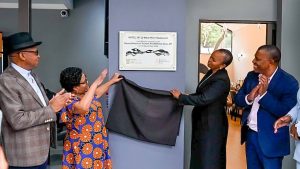
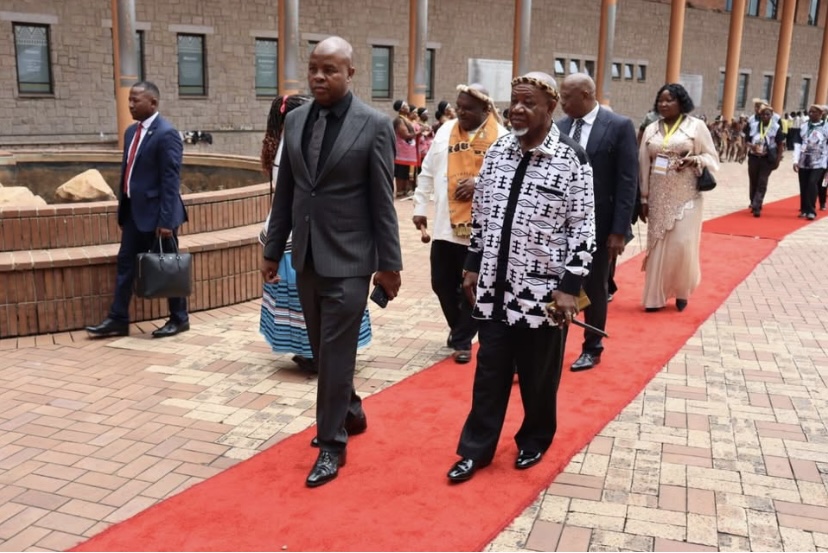
Mpumalanga Premier, Mandla Ndlovu, has reaffirmed traditional leadership as a cornerstone of governance and development, officially opening the Provincial HTL(House of Traditional and Khoi-San Leaders) at the Mpumalanga Legislature, on Wednesday 6 May 2026, in a ceremony steeped in history, culture and a call for unity.
“As we gather today in this sacred space, we do so not as people without memory, but as a nation shaped by history, sacrifice and endurance,” Ndlovu said.
He walked into the House carrying “the legacy of those who walked before us, those who suffered so that we may stand upright today, and those whose blood, sweat and courage earned us the freedom we enjoy today”.
Tradition Meets Democracy
The Premier stressed that the House is more than a ceremonial structure. “It is the embodiment of the living relationship between the people and governance where tradition meets democracy, where heritage informs development, and where ancestral wisdom guides modern policy,” said the Premier.
Ndlovu honoured forebears including King Sekhukhune, King Musi KaMahlangu, Hosi Soshangane Nxumalo and King Zulu kaMalandela, whose “resilience and courage embodied the enduring strength and dignity of African leadership in the face of adversity,”
For an African, he said, such commemorations are “not mere ceremonies. They are spiritual moments. Leadership is not about position, but about service; not about privilege, but about sacrifice; not about glory, but about responsibility,”
Agrarian Revolution and Land Access
At the heart of the Premier’s address was a push to transform rural economies through an Agrarian Revolution. He said traditional leaders are central to unlocking communal land for productive use and shifting communities “from subsistence to commercial-scale agricultural participation,”
Government is implementing a targeted agricultural support programme to prepare farmers in traditional authority areas for the upcoming Mpumalanga International Food Market. Support will include mechanisation, seeds, fertilisers, agrochemicals and technical advisory services to help farmers meet market standards.
Ndlovu also highlighted the Masibuyele Esibayeni Programme, particularly the Bull Scheme, which provides high-quality breeding bulls to improve livestock genetics and market value in communal grazing systems.
To back these commitments, the Premier pledged to donate a cow to each traditional authority and confirmed that bakkies for all Traditional Authorities in the province will be delivered within the current financial year to support small-scale farming and market access. Boreholes will also be installed at Traditional Council Offices to provide reliable water for small-scale fresh produce.
Strengthening Institutions and Infrastructure
Since 2024, government has constructed over 30 new Traditional Council Offices and renovated 25 others, equipping them with connectivity and security.
Five new offices in Matsamo, Amashangana, Mahlaphahlapha, Kwandwalaza and Ogenyaneni are now fully operational, with eight others recently renovated.
Looking to 2026/27, Ndlovu announced plans to construct additional offices in Lekgoetla, Kgarudi and eSandleni, while renovating Enikwakuyengwa and Ebutsini. “Our vision is bold, clear, and non-negotiable, modern, functional, and dignified spaces for all our traditional leaders,” he said.
The province is also finalising the recognition of the Magwazidili traditional community in Amsterdam, Mkhondo, and has resolved succession disputes in Enikwakuyengwa, Kgarudi, Thabakgolo and Manala Makerana through collaboration between COGHSTA and the Provincial House.
Safety, Culture and Social Cohesion
Ndlovu called on traditional leaders to be the first line of defence against crime, gender-based violence and substance abuse. “Their authority and proximity to the people make them indispensable actors in building safer communities.”
Structured partnerships between traditional councils, Community Policing Forums and law enforcement are being strengthened, with joint safety forums and capacity-building programmes rolled out at traditional authority level.
On culture, the Premier stressed the importance of protecting and regulating initiation schools, with 600 JoJo tanks distributed to ensure water security during the 2026 season. He also underscored the role of cultural gatherings like Ummemo as platforms for unity, accountability and leadership.
Local Government and the 2026 Elections
With local government elections set for 4 November 2026, Ndlovu said traditional leaders have a pivotal role as custodians of social cohesion and mediators of community tensions.
“The stability of our democracy rests on unity of purpose and shared responsibility,” he said, referencing President Cyril Ramaphosa’s recent engagement with leaders across all three spheres of government.
A Covenant for the Future
The Premier said an amount of R100 000 will be contributed towards the burial of every recognised senior traditional leader and their spouse.
In terms of cultural practices, Ndlovu said initiation schools must be protected, regulated and made safe. He said the provincial government is strengthening support for cultural and administrative functions as part of a commitment to preserving heritage while enhancing the effectiveness of traditional institutions.
“Cultural gatherings such as Ummemo are not merely ceremonial occasions, they are vital platforms for unity, accountability and leadership. They provide abo‑Ndabezitha with an annual opportunity to report back to their communities on the work of Traditional Councils, to reflect on challenges, and to chart a collective way forward.
“ We engaged with the PICC to check our preparedness for the winter initiation schools. Our foremost priority is the safety of our children. It is our prayer and wish that our children leave their homes and come back to re-join their families alive,” said Ndlovu.
He said the initiation period for 2026 are as follows;
• AmaNdebele: 15 May – 16 July
• Bapedi: 26 June – 31 July
• Bakone: 16 May – 07 September (out-of-school initiates)
• Amaxhosa: 11 April – 10 June, it is only one initiate who is also not at school.
“ To enhance monitoring capacity and ensure water security, accessibility, and effective oversight, we have procured three district vehicles and leased an additional six, bringing the total number of vehicles to nine. In addition, 600 JoJo tanks have been distributed to initiation schools to ensure a reliable supply of water to safeguard the health and well-being of initiates,” said Ndlovu.
He added that the House must champion Unity in diversity, strengthening the social fabric of Mpumalanga through cultural programmes, dialogues and heritage preservation.
“ As the government, we have responded to concerns regarding the appointment and remuneration of Headmen and Headwomen, streamlined processes, and addressed administrative bottlenecks.
“ While committing to continuous training and capacity building in partnership with the University of Mpumalanga and the Moral Regeneration Movement. Together, we shall build a Province that honours its heritage while embracing progress,” Premier Ndlovu concluded.
Caption: Traditional dancers entertaining the guests